
School Management Software: Simplifying Educational Administration
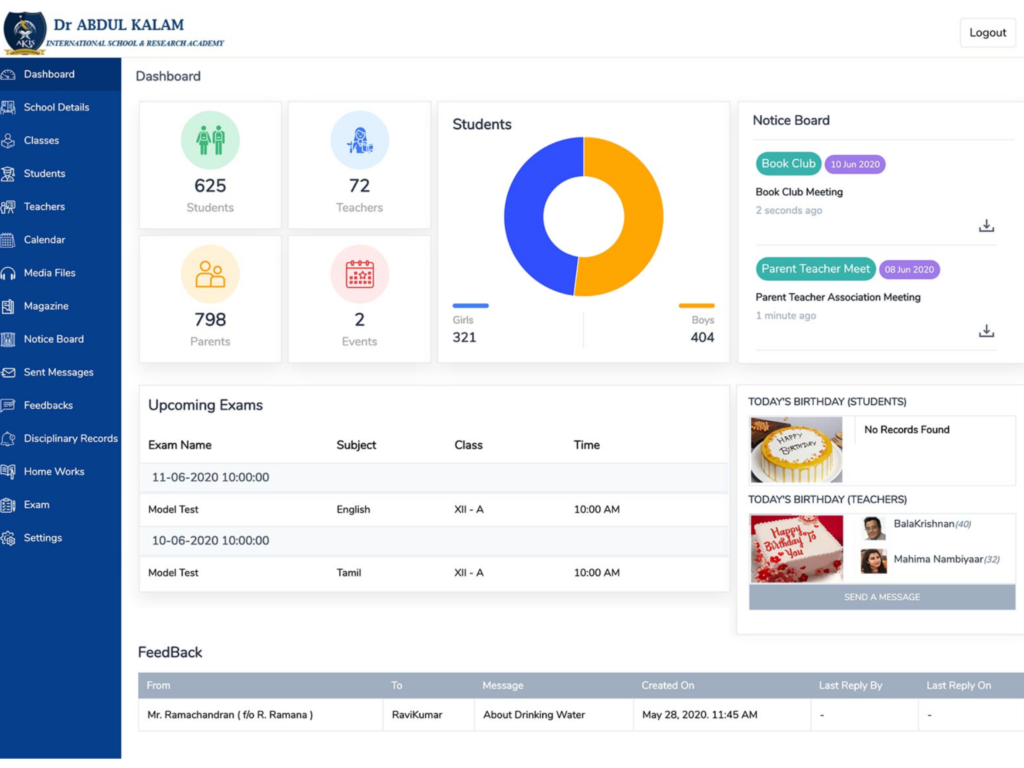
School management software helps educational institutions streamline and manage their day-to-day administrative activities more efficiently. From handling student admissions and attendance to managing fees, academic records, and communication, schools deal with a significant amount of information on a daily basis.
By bringing all these processes together on a single platform, a school management system simplifies operations, reduces administrative workload, and improves communication between administrators, teachers, students, and parents. This allows educational institutions to spend less time on paperwork and more time focusing on quality education and student development.
What is School Management Software?
School management software is a digital solution that helps educational institutions automate and manage both administrative and academic activities from a single platform. It brings together student records, teacher information, parent communication, attendance, fees, and other essential school operations in one centralized system.
By simplifying everyday tasks and improving access to information, school management software helps schools operate more efficiently, enhance communication, and create a better learning environment for students, teachers, and parents.
Why Schools Need Management Software
School management software helps educational institutions streamline administrative tasks, improve communication, and manage school operations more effectively.
It helps schools:
Reduce Paperwork and Manual Processes – Automate routine administrative tasks, reducing the time spent on paperwork and manual record-keeping.
Improve Communication Between Parents and Teachers – Enable faster and more transparent communication through notifications, updates, and messaging tools.
Manage Student Records Efficiently – Store and access student information, academic records, and attendance data from a centralized system.
Automate Attendance and Fee Collection – Simplify attendance tracking and fee management while reducing administrative effort.
Improve Overall Administrative Productivity – Streamline daily operations, allowing staff to focus on supporting students and educational goals.
By adopting a digital school management system, institutions can improve efficiency, increase transparency, and create a better experience for students, parents, teachers, and administrators.
Key Features of School Management Software
1. Student Information Management
Store and manage student records securely in a centralized system, making information easy to access and update when needed.
2. Attendance Management
Automatically track student and staff attendance, reducing manual effort and improving accuracy.
3. Fee Management
Simplify fee collection, payment tracking, and financial record management through an organized digital platform.
4. Examination Management
Manage exams, grades, report cards, and academic performance records efficiently from one place.
5. Parent Communication
Strengthen communication between schools and parents through instant notifications, announcements, and regular updates.
These features help schools streamline administrative processes, improve efficiency, and create a more connected educational environment.
Benefits of School Management Software
1. Improved Efficiency
Automate routine administrative tasks, reducing manual work and allowing staff to focus on more important educational activities.
2. Better Data Management
Keep student, academic, and administrative records organized and easily accessible through a centralized system.
3. Enhanced Communication
Strengthen collaboration and information sharing between teachers, parents, students, and school administrators.
4. Accurate Reporting
Generate real-time reports and insights on attendance, academic performance, fees, and other key school operations.
5. Time and Cost Savings
Reduce paperwork, minimize administrative overhead, and improve operational efficiency across the institution.
By streamlining daily operations and improving access to information, school management software helps educational institutions operate more effectively while creating a better experience for students, parents, and staff.
Challenges Solved by School Management Software
Managing a school involves handling a wide range of administrative and academic responsibilities, which can become time-consuming and complex without the right tools.
Common challenges include:
Managing Large Volumes of Student Records – Keeping student information organized and up to date can be difficult when handled manually.
Tracking Attendance Manually – Manual attendance processes are often time-consuming and prone to errors.
Delayed Communication with Parents – Sharing important updates and information can be challenging without an efficient communication system.
Fee Collection Difficulties – Tracking payments, pending fees, and financial records manually can create administrative burdens.
Heavy Administrative Workload – Managing admissions, academics, attendance, and reporting can consume valuable time and resources.
School management software helps address these challenges by automating routine tasks, centralizing information, and improving communication. This enables schools to operate more efficiently while providing better support for students, parents, teachers, and administrators.
How to Choose the Right School Management Software
Selecting the right school management software is an important step toward improving both administrative efficiency and academic management. When evaluating different solutions, consider the following factors:
Ease of Use – Choose a platform that is intuitive and easy for administrators, teachers, students, and parents to use.
Mobile Accessibility – Ensure the software is accessible on mobile devices, allowing users to stay connected anytime and anywhere.
Security Features – Look for strong security measures to protect sensitive student, staff, and institutional data.
Customization Options – Select a solution that can be tailored to meet your school’s unique processes and requirements.
Technical Support – Reliable support and training services are essential for smooth implementation and ongoing use.
A well-chosen school management system can streamline daily operations, improve communication, enhance productivity, and create a better educational experience for everyone involved.
Future of School Management Software
School management systems are continuously evolving to meet the changing needs of modern educational institutions. New technologies are making school operations more efficient, connected, and data-driven.
Key trends shaping the future include:
Cloud-Based Platforms – Enable secure access to school data from anywhere while improving collaboration and flexibility.
Mobile Applications – Keep students, parents, teachers, and administrators connected through convenient mobile access.
AI-Powered Analytics – Use intelligent insights to monitor performance, identify trends, and support better decision-making.
Online Learning Integration – Seamlessly connect classroom management with digital learning tools and virtual education platforms.
Advanced Reporting Tools – Generate detailed reports and real-time insights to improve academic and administrative planning.
As these innovations continue to evolve, educational institutions can enhance efficiency, improve communication, and deliver a more engaging and effective learning experience for students.
Conclusion
School management software is transforming how educational institutions handle their day-to-day operations. By automating routine administrative tasks, centralizing information, and improving communication between teachers, parents, students, and administrators, schools can operate more efficiently and effectively.
With less time spent on manual processes and paperwork, educational institutions can focus more on what matters most—delivering quality education, enhancing the learning experience, and supporting the overall success and development of their students.