Employee Management Software: Simplify Workforce Management and Boost Productivity
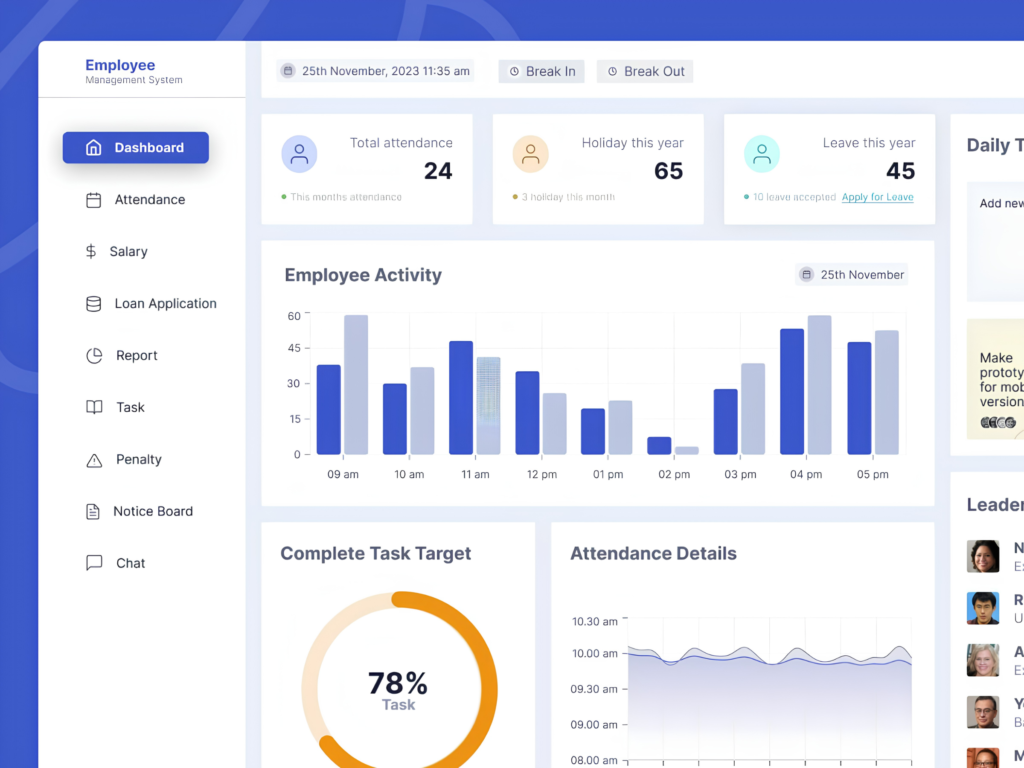
Employee management software helps businesses efficiently manage their workforce from a single, centralized platform. As organizations grow, handling employee records, attendance, leave requests, performance reviews, and day-to-day HR tasks manually can become time-consuming, error-prone, and difficult to manage.
A centralized employee management system simplifies these processes by automating routine HR activities, organizing employee information, and improving communication across the organization. With real-time access to workforce data and performance insights, managers can make informed decisions, boost employee productivity, and create a more efficient and organized workplace.
What is Employee Management Software?
Employee management software is a digital solution that helps organizations efficiently manage their workforce from a single, centralized platform. It brings together essential HR functions such as employee records, attendance tracking, leave management, payroll integration, performance monitoring, and daily workforce activities in one place.
By automating routine HR processes and keeping employee information organized, businesses can reduce administrative workload, improve accuracy, and increase overall productivity. It also provides managers with better visibility into workforce performance, helping them make informed decisions and create a more efficient, well-managed workplace.
Why Businesses Need Employee Management Software
Employee management software helps businesses streamline HR operations, improve workforce management, and create a more productive work environment.
It helps organizations:
Manage Employee Records Securely – Store and organize employee information in one secure, centralized system for quick and easy access.
Track Attendance Automatically – Monitor employee attendance in real time, reducing manual errors and simplifying attendance management.
Simplify Leave Management – Make it easy for employees to request leave while allowing managers to review and approve requests efficiently.
Improve Workforce Productivity – Automate routine HR tasks so employees and managers can focus on more strategic and productive work.
Monitor Employee Performance – Track performance, goals, and progress to support employee development and informed decision-making.
Reduce Manual HR Work – Eliminate repetitive paperwork and streamline administrative processes through automation.
By centralizing employee information and automating everyday HR tasks, employee management software helps businesses improve operational efficiency, enhance employee experiences, and build a more organized and productive workforce.
Key Features of Employee Management Software
1. Employee Database
Store employee profiles, personal information, documents, and contact details securely in one centralized location for easy access and management.
2. Attendance Management
Automatically track employee attendance, working hours, shifts, and overtime to ensure accurate records and simplify workforce management.
3. Leave Management
Enable employees to submit leave requests online while allowing managers to review, approve, or reject requests quickly through a digital workflow.
4. Performance Management
Monitor employee goals, performance reviews, productivity, and progress to support continuous development and fair performance evaluations.
5. Reports and Analytics
Generate detailed workforce reports and real-time analytics to monitor attendance, employee performance, leave trends, and overall HR operations.
These features help businesses streamline HR processes, improve workforce management, increase productivity, and make informed decisions based on accurate, real-time data.
Benefits of Employee Management Software
1. Improved HR Efficiency
Automate routine administrative tasks, reduce manual work, and allow HR teams to focus on strategic initiatives and employee development.
2. Better Employee Experience
Give employees easy access to their attendance records, leave balances, personal information, and HR services through a self-service platform.
3. Higher Productivity
Reduce paperwork, simplify daily HR processes, and create a more efficient work environment that helps employees stay focused on their responsibilities.
4. Accurate Workforce Records
Maintain secure, up-to-date employee information in one centralized system, making it easier to access and manage records whenever needed.
5. Data-Driven HR Decisions
Leverage real-time reports and analytics to monitor workforce trends, evaluate performance, and make informed decisions about hiring, planning, and employee management.
By automating HR operations and centralizing employee information, employee management software helps businesses improve efficiency, enhance employee satisfaction, and build a more productive and well-organized workforce.
Industries Using Employee Management Software
Employee management software is widely used across a variety of industries to simplify HR operations, improve workforce management, and enhance employee productivity.
IT Companies – Manage employee records, attendance, performance, leave, and project-based workforce activities efficiently.
Manufacturing Industries – Track shifts, attendance, workforce productivity, and employee performance across multiple departments.
Hospitals – Manage healthcare staff schedules, attendance, leave requests, and employee records while ensuring smooth daily operations.
Educational Institutions – Organize staff information, attendance, payroll integration, and performance management for teachers and administrative employees.
Retail Businesses – Monitor employee schedules, attendance, shift planning, and workforce productivity across multiple store locations.
Logistics Companies – Manage drivers, warehouse staff, field employees, attendance, and workforce performance from a centralized platform.
Financial Organizations – Streamline HR processes, maintain secure employee records, track performance, and ensure compliance with organizational policies.
Organizations across these industries rely on employee management software to improve operational efficiency, simplify HR processes, enhance employee experiences, and build a more productive workforce.
Signs Your Business Needs Employee Management Software
As your workforce grows, managing HR processes manually can become time-consuming and inefficient. If you’re facing any of the following challenges, it may be time to invest in employee management software:
Attendance Is Tracked Manually – Manual attendance tracking can lead to errors, consume valuable time, and make workforce management more difficult.
Employee Records Are Difficult to Maintain – Storing employee information across spreadsheets or paper files can make it hard to access and update records accurately.
Leave Approvals Are Delayed – Manual leave request processes can slow approvals and create confusion for both employees and managers.
HR Paperwork Is Increasing – Handling employee records, documents, and administrative tasks manually adds unnecessary workload and reduces efficiency.
Workforce Performance Is Difficult to Monitor – Without centralized performance tracking, it’s challenging to measure productivity, set goals, and make informed HR decisions.
Employee management software helps address these challenges by automating HR processes, centralizing employee information, and providing real-time insights into workforce performance. This enables businesses to improve efficiency, enhance employee experiences, and build a more organized and productive workplace.
How to Choose the Right Employee Management Software
Choosing the right employee management software is essential for simplifying HR operations, improving workforce productivity, and supporting long-term business growth. Before making a decision, consider the following factors:
User-Friendly Interface – Select software that is easy for both employees and HR teams to navigate, ensuring quick adoption and minimal training.
Attendance and Leave Management – Look for features that automate attendance tracking, shift management, and leave requests to reduce manual effort.
Performance Tracking – Choose a solution that helps monitor employee goals, performance reviews, and overall productivity.
Payroll Integration – Ensure the software integrates seamlessly with your payroll system to simplify salary processing and reduce administrative work.
Mobile Accessibility – Opt for a platform that allows employees and managers to access HR services, approve requests, and manage tasks from anywhere.
Reporting Capabilities – Look for real-time reports and analytics that provide valuable insights into attendance, performance, workforce trends, and HR operations.
Scalability – Choose software that can grow with your business and adapt to the changing needs of your expanding workforce.
The right employee management software helps businesses streamline HR processes, improve employee engagement, increase operational efficiency, and build a strong foundation for future growth.
Future of Employee Management Software
Employee management software is evolving rapidly as modern technologies transform the way businesses manage and support their workforce. These innovations are helping organizations create more efficient HR processes while improving employee engagement and productivity.
Key trends shaping the future include:
AI-Powered Performance Analysis – Use artificial intelligence to evaluate employee performance, identify development opportunities, and support data-driven HR decisions.
Cloud-Based HR Platforms – Access employee information securely from anywhere, making it easier for HR teams and employees to collaborate and manage tasks remotely.
Employee Self-Service Portals – Empower employees to update personal information, apply for leave, view attendance records, and access HR services without relying on manual processes.
Workforce Analytics – Gain valuable insights into employee productivity, attendance, retention, and workforce trends to improve planning and decision-making.
Mobile-First HR Management – Enable managers and employees to handle HR activities, approve requests, and access important information anytime through mobile applications.
As these technologies continue to evolve, businesses can streamline HR operations, improve employee experiences, increase productivity, and build a more engaged, efficient, and future-ready workforce.
Conclusion
Employee management software is an essential tool for businesses looking to streamline HR operations and manage their workforce more effectively. By centralizing employee records, attendance, leave management, performance tracking, and other HR activities, it helps organizations reduce manual work, improve accuracy, and simplify day-to-day operations.
With automated workflows and real-time access to workforce data, businesses can enhance employee productivity, make informed HR decisions, and create a more organized and engaging work environment. Investing in the right employee management software not only improves operational efficiency but also supports employee development and drives long-term business growth.