
Purchase Order Management Software: Streamline Your Procurement Process
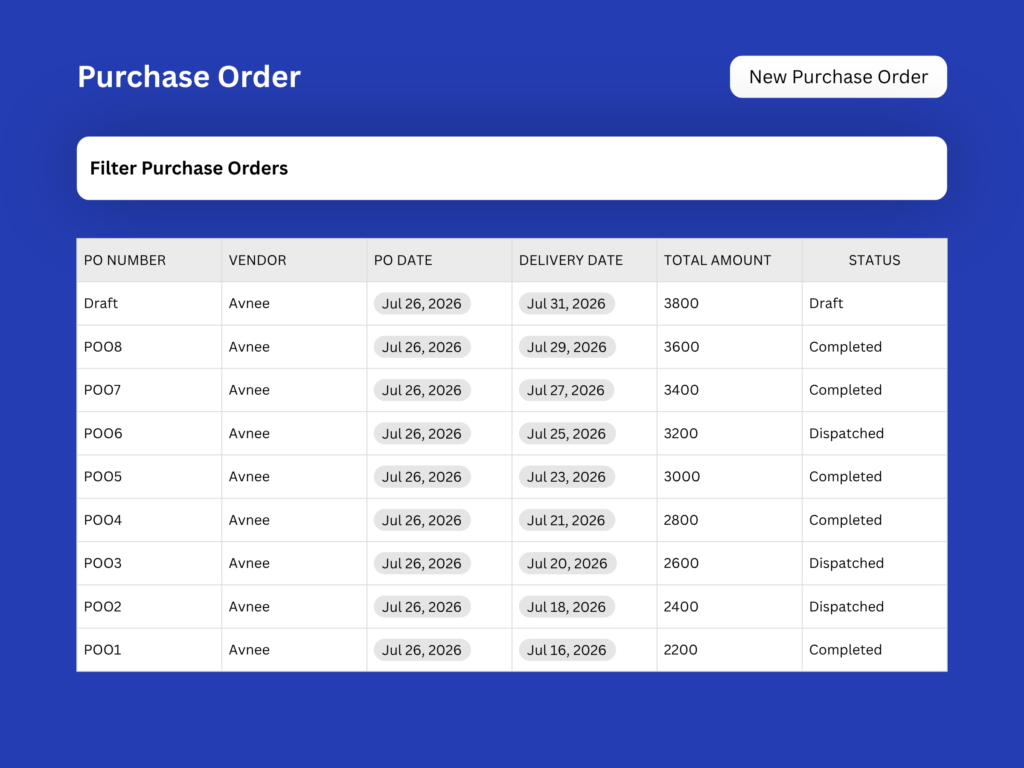
Purchase order management software helps businesses simplify and automate the entire procurement process, from creating purchase requests and issuing purchase orders to receiving goods and managing supplier payments. As businesses grow, handling procurement manually can lead to delays, duplicate orders, approval bottlenecks, and limited visibility into spending.
By implementing purchase order management software, organizations can streamline purchasing workflows, improve order accuracy, strengthen supplier relationships, and gain greater control over procurement activities. This enables businesses to reduce costs, improve operational efficiency, and make more informed purchasing decisions.
What is Purchase Order Management Software?
Purchase order management software is a digital solution that helps businesses automate and manage their purchasing activities from a single, centralized platform. It enables organizations to create and track purchase orders, manage supplier information, monitor deliveries, streamline approval workflows, and keep procurement expenses under control.
By bringing the entire purchasing process into one system, businesses can improve efficiency, reduce manual errors, gain better visibility into procurement operations, and make smarter purchasing decisions.
Why Businesses Need Purchase Order Management Software
Purchase order management software helps businesses streamline procurement processes, improve spending control, and strengthen supplier relationships.
It helps organizations:
Automate Purchase Requests – Simplify the process of creating, reviewing, and approving purchase requests, saving time and reducing manual effort.
Eliminate Duplicate Orders – Prevent duplicate purchases by maintaining accurate records and centralized order tracking.
Improve Supplier Communication – Keep vendor information organized and ensure clear, timely communication throughout the purchasing process.
Control Procurement Costs – Monitor spending, manage budgets, and make informed purchasing decisions to reduce unnecessary expenses.
Increase Purchasing Transparency – Gain complete visibility into purchase orders, approvals, deliveries, and procurement activities.
By creating a structured and automated purchasing process, businesses can reduce operational risks, improve efficiency, and maintain better control over their procurement operations.
Key Features of Purchase Order Management Software
1. Purchase Order Creation
Create accurate, professional purchase orders quickly, helping streamline the procurement process and reduce manual effort.
2. Vendor Management
Maintain a centralized database of supplier information, pricing, contracts, and performance to build stronger vendor relationships.
3. Approval Workflow
Automate purchase request approvals by routing them to the appropriate stakeholders, ensuring faster and more controlled procurement.
4. Order Tracking
Track every purchase order in real time, from order placement and approval to delivery and receipt of goods.
5. Reporting and Analytics
Generate detailed reports on purchasing trends, supplier performance, and procurement expenses to support smarter business decisions.
These features help businesses simplify procurement, improve purchasing accuracy, and gain better visibility into every stage of the purchasing process.
Benefits of Purchase Order Management Software
1. Improved Purchasing Accuracy
Reduce manual data entry errors and ensure purchase orders are accurate and consistent.
2. Faster Procurement
Automate purchasing workflows to speed up approvals, order processing, and the overall procurement cycle.
3. Better Vendor Relationships
Strengthen supplier partnerships through organized communication, timely orders, and transparent procurement processes.
4. Cost Control
Monitor procurement budgets, track spending, and prevent unnecessary or duplicate purchases.
5. Complete Procurement Visibility
Gain real-time visibility into every stage of the purchasing process, from purchase requests and approvals to delivery and payment.
By automating procurement activities and improving visibility, purchase order management software helps businesses reduce costs, increase efficiency, and make smarter purchasing decisions.
Industries That Use Purchase Order Management Software
Purchase order management software is used across a wide range of industries to simplify procurement, improve supplier management, and streamline purchasing operations.
Manufacturing – Manage raw material purchases, supplier coordination, and production-related procurement.
Retail – Track inventory purchases, manage suppliers, and ensure products are stocked on time.
Healthcare – Streamline the procurement of medical equipment, medicines, and essential healthcare supplies.
Construction – Manage material orders, vendor contracts, and project-related purchasing efficiently.
Wholesale – Organize bulk purchasing, supplier relationships, and inventory replenishment.
Logistics – Coordinate the procurement of equipment, vehicles, and operational supplies while tracking purchasing activities.
Educational Institutions – Manage the purchase of books, laboratory equipment, office supplies, and other institutional resources.
Organizations across these industries rely on purchase order management software to improve procurement efficiency, maintain better spending control, and build stronger supplier relationships.
Signs Your Business Needs Purchase Order Management Software
Your business may benefit from purchase order management software if managing procurement has become time-consuming, inefficient, or difficult to control.
Common signs include:
Purchase Approvals Take Too Long – Delayed approvals can slow down procurement and impact business operations.
Orders Are Frequently Misplaced – Managing purchase orders manually can lead to lost or duplicate orders.
Procurement Costs Are Increasing – Limited visibility into spending can result in unnecessary purchases and higher costs.
Vendor Records Are Difficult to Manage – Keeping supplier information organized across multiple systems can create confusion and inefficiencies.
Manual Paperwork Slows Operations – Paper-based processes and manual data entry reduce productivity and increase the risk of errors.
Implementing purchase order management software helps automate procurement, improve visibility, reduce manual work, and create a faster, more organized purchasing process.
How to Choose the Right Purchase Order Management Software
Selecting the right purchase order management software is essential for improving procurement efficiency and maintaining better control over purchasing activities. When evaluating different solutions, look for the following features:
Easy Implementation – Choose software that is simple to deploy and easy for your team to adopt with minimal disruption.
ERP Integration – Ensure the platform integrates seamlessly with your existing ERP, accounting, and business systems for smooth data flow.
Vendor Management – Look for tools that help you organize supplier information, track performance, and manage vendor relationships effectively.
Mobile Accessibility – Enable employees to create, approve, and monitor purchase orders from anywhere using mobile devices.
Custom Approval Workflows – Select software that allows you to configure approval processes based on your organization’s purchasing policies.
Real-Time Reporting – Gain instant insights into procurement activities, spending, purchase orders, and supplier performance through detailed reports.
Strong Security – Protect sensitive procurement data with role-based access controls, secure storage, and advanced security features.
Choosing the right purchase order management software can streamline procurement, improve visibility, strengthen supplier relationships, and support long-term business growth.
Future of Purchase Order Management Software
Purchase order management systems are evolving rapidly, with new technologies making procurement faster, smarter, and more efficient.
Key trends shaping the future include:
AI-Powered Purchasing Recommendations – Use artificial intelligence to recommend the best suppliers, optimize purchasing decisions, and reduce unnecessary spending.
Predictive Procurement Planning – Analyze historical purchasing data to forecast future procurement needs and prevent supply shortages.
Automated Supplier Evaluation – Continuously assess supplier performance based on factors such as pricing, delivery times, and product quality.
Cloud-Based Procurement Platforms – Enable teams to manage purchasing activities securely from anywhere while improving collaboration across departments.
Real-Time Purchasing Analytics – Access up-to-date insights into procurement performance, spending patterns, and supplier efficiency for better decision-making.
As these technologies continue to evolve, businesses can streamline procurement processes, improve purchasing accuracy, reduce operational costs, and build stronger supplier relationships.
Conclusion
Purchase order management software helps businesses simplify and streamline the entire procurement process by automating purchasing tasks, improving supplier management, and providing complete visibility into business spending. By replacing manual processes with a centralized system, organizations can reduce errors, speed up approvals, and make more informed purchasing decisions.
Whether you’re a small business or a large enterprise, investing in the right purchase order management solution can improve operational efficiency, strengthen vendor relationships, reduce procurement costs, and provide a solid foundation for long-term business growth and success.